Zwischen Leichtigkeit und Last: Lernen oder Land?
Eine Entscheidung in Kathmandu
„Miete ist weg. Land bleibt.“
Der Vater sagt das in die Kamera.
Hinter ihm klappert Metall. Küche. Varanasi. Er arbeitet dort als Koch.
In Kathmandu sitzt Hishsi auf dem Boden ihres Wohnzimmers.
Neben ihr die Mutter. Sareena lehnt an der Wand.
„Ich habe eine Wohnung gemietet. Für uns“, sagt Hishsi.
„Miete ist weg“, antwortet der Vater. „Land bleibt.“
Die Verbindung ruckelt.
Pause.
„Ich lege das Geld an“, sagt sie. „In Aktienfonds. Über ein Depot.“
Der Vater schüttelt den Kopf.
„Papier ist nichts.“
Er meint: kein Boden. Kein Schutz. Keine Sicherheit.
Hishsi sagt leise:
„Wenn ich jetzt lerne, kann ich später mehr kaufen.“
Dann sagt niemand mehr etwas.
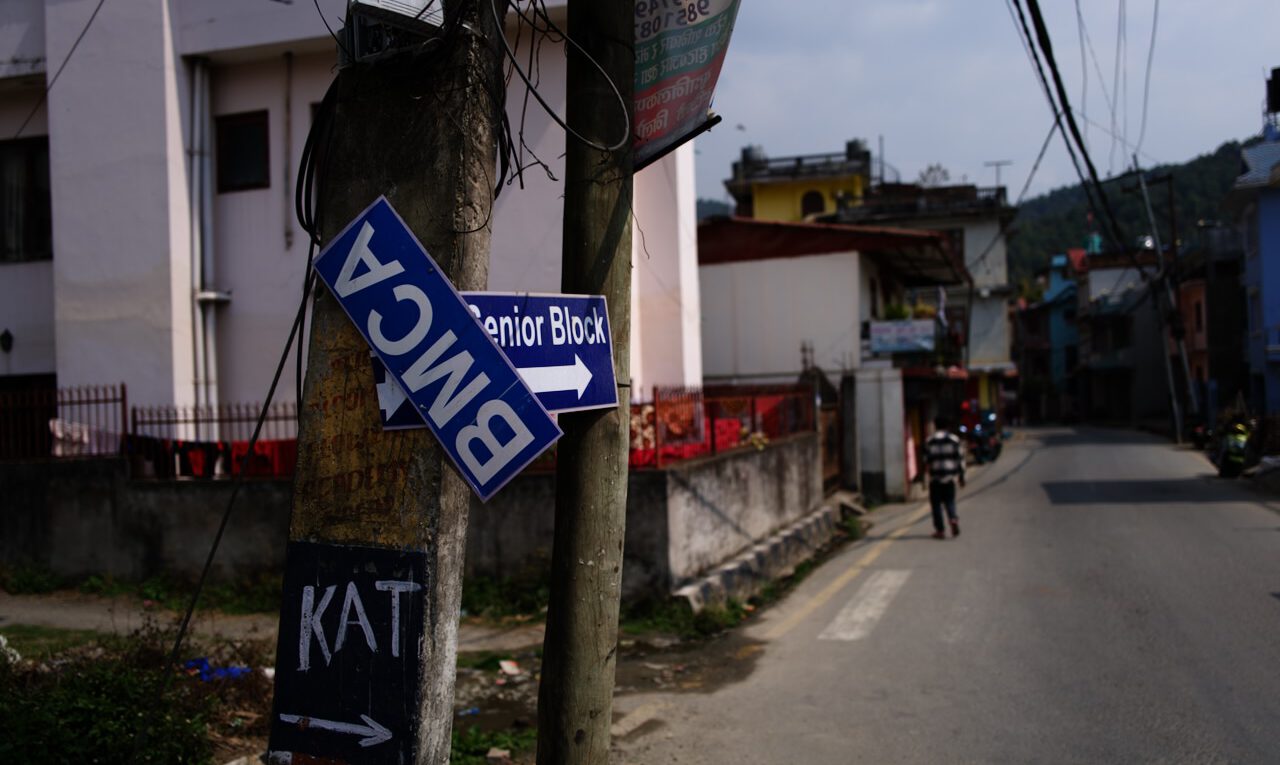
Kathmandu
Abends wird es stiller.
Nicht ruhig – nur weniger laut.
Die Wohnung kostet 25.000 Rupien im Monat.
Zwei Schlafzimmer, ein Wohnzimmer. Drei Frauen, die hier leben.
Die Mutter, Ende vierzig.
Sareena, 25.
Hishsi, 29. Sie zahlt die Miete.
Reis. Gas. Internet.
Ein Alltag, der jeden Monat neu beginnt.
Worum es geht
Hishsi hat Geld bekommen.
Genug, um etwas zu verändern.
Drei Möglichkeiten stehen im Raum:
- ein Grundstück kaufen
- den Alltag absichern
- in Bildung investieren
Die Familie sieht Sicherheit.
Hishsi sieht Zukunft.
Ich sitze dazwischen.
Ich bin ihr Pate.
Ich unterstütze sie finanziell.
Und ich frage mich:
Wie hilft man, ohne zu bestimmen?
Die andere Seite
Später, in Thamel.
Plastikstühle. Zwei Tassen Tee.
Ihr Freund lacht.
Hishsi auch.
Hier fragt niemand nach Miete.
Niemand nach Geld.
Niemand nach Zukunft.
Für einen Moment verliert das Leben sein Gewicht.
Ich sehe das.
Ich verstehe es.
Und ich sehe auch:
Diese Leichtigkeit hat ihren Preis.
Nicht heute. Aber später.
Was man nicht sieht
Hishsi kommt aus einer Dalit-Familie.
Im Kathmandu-Tal zeigt sich das selten offen.
Niemand schickt sie weg. Niemand verweigert ihr ein Formular.
Und doch wirkt es weiter.
Nicht außen. Innen.
- als Zweifel
- als Vorsicht
- als Misstrauen gegenüber dem, was man nicht greifen kann
Die Mutter sagt:
„Ein Grundstück gibt Ruhe.“
Das stimmt.
Und es erklärt fast alles.
Der Rahmen
Ich entscheide nicht für Hishsi.
Aber ich lasse sie nicht allein.
Ich mache es konkret.
Drei Bereiche:
- Ausbildung
- Leben
- Reserve
Ein einfacher Rhythmus:
- Examen der 12. Klasse
- Sprachprüfung bestanden
- Bewerbung um einen Studienplatz
– in Nepal oder im Ausland
Drei Regeln:
- kein Grundstück jetzt
- keine großen Ausgaben allein
- jeden Monat Überblick
Das ist kein Plan für ihr Leben.
Es ist ein Geländer.
Zwei Sätze
Ein paar Tage später wieder ein Anruf.
„Wenn ich jetzt Land kaufe, ist das Geld weg“, sagt Hishsi.
Der Vater antwortet:
„Dann kaufst du nie.“
Stille.
Später sagt die Mutter zu mir:
„Ein Grundstück schläft nicht weg.“
Ich nicke.
Sie hat recht.
Und doch nicht ganz.
Mein Dilemma
Ich sitze zwischen diesen Sätzen.
Wenn ich nichts sage,
lasse ich sie in ein Muster laufen, das ich kenne.
Wenn ich zu viel sage,
nehme ich ihr die Entscheidung.
Beides ist falsch.
Ich kann nur eines tun:
Ich halte den Rahmen.
Ich halte ihn nicht fest.
Was sich entscheidet
Es geht nicht nur um Geld.
Es geht um Richtung.
Ein Grundstück hält fest.
Bildung öffnet.
Das eine schützt vor Verlust.
Das andere vor Abhängigkeit.
Beides hat seinen Preis.
Woran man es sieht
Nicht an Worten.
Sondern an kleinen Dingen:
- Bewirbt sie sich?
- Beginnt sie zu studieren?
- Bleibt sie dran?
Oder verschiebt sie?
Schluss
Das Geld gibt Zeit.
Mehr nicht.
Der Rest ist Entscheidung.
Wie hilft man, ohne zu bestimmen?
Ich habe keine Antwort.
Nur diesen Versuch:
Fragen stellen.
Struktur geben.
Grenzen setzen.
Und dann loslassen.
Ob es reicht, wird sich zeigen.
English version below
Between Lightness and Burden: Education or Land?
A decision in Kathmandu
“Rent is gone. Land remains.”
The father says it into the camera.
Metal clatters behind him. Kitchen. Varanasi. He works there as a cook.
In Kathmandu, Hishsi sits on the floor of her living room.
Her mother beside her. Sareena leaning against the wall.
“I rented an apartment. For all of us,” Hishsi says.
“Rent is gone,” the father replies. “Land remains.”
The connection flickers.
Pause.
“I’m investing the money,” she says. “In stock funds. Through an account.”
The father shakes his head.
“Paper is nothing.”
He means: no ground. No protection. No security.
Hishsi says quietly:
“If I study now, I can buy more later.”
No one speaks after that.
Kathmandu
In the evening, things grow quieter.
Not silent—just less loud.
The apartment costs 25,000 rupees a month.
Two bedrooms, one living room. Three women live here.
The mother, late forties.
Sareena, 25.
Hishsi, 29. She pays the rent.
Rice. Gas. Internet.
A life that starts over every month.
What this is about
Hishsi has received money.
Enough to change something.
Three options lie on the table:
- buy land
- secure everyday life
- invest in education
The family sees security.
Hishsi sees a future.
I sit in between.
I am her sponsor.
I support her financially.
And I ask myself:
How do you help without taking control?
The other side
Later, in Thamel.
Plastic chairs. Two cups of tea.
Her boyfriend laughs.
Hishsi does too.
No one asks about rent.
No one asks about money.
No one asks about the future.
For a moment, life loses its weight.
I see it.
I understand it.
And I also see this:
That lightness has a price.
Not today. But later.
What you don’t see
Hishsi comes from a Dalit family.
In the Kathmandu Valley, this rarely shows openly.
No one turns her away. No one rejects her paperwork.
And yet it remains.
Not outside. Inside.
- as doubt
- as caution
- as mistrust of what cannot be touched
Her mother says:
“Land brings peace.”
It’s true.
And it explains almost everything.
The framework
I don’t decide for Hishsi.
But I don’t leave her alone.
I make things concrete.
Three areas:
- education
- living expenses
- reserve
A simple sequence:
- final school exam
- language test passed
- application for a study place
– in Nepal or abroad
Three rules:
- no land purchase now
- no major spending alone
- a monthly overview
This is not a life plan.
It’s a guardrail.
Two sentences
A few days later, another call.
“If I buy land now, the money is gone,” Hishsi says.
The father replies:
“Then you’ll never buy.”
Silence.
Later, her mother says to me:
“Land doesn’t disappear while you sleep.”
I nod.
She’s right.
And not entirely.
My dilemma
I sit between these sentences.
If I say nothing,
she may follow a path I already know.
If I say too much,
I take the decision away from her.
Both are wrong.
I can only do one thing:
Hold the frame.
But not hold on.
What is at stake
This is not just about money.
It is about direction.
Land anchors.
Education opens.
One protects against loss.
The other against dependence.
Both come at a cost.
How you can tell
Not by words.
By small actions:
- Does she apply?
- Does she start studying?
- Does she keep going?
Or does she postpone?
Conclusion
The money buys time.
Nothing more.
The rest is choice.
How do you help without taking control?
I don’t have an answer.
Only this attempt:
Ask questions.
Create structure.
Set boundaries.
And then let go.
Whether it is enough remains to be seen.